Showing posts with label bonobo apes. Show all posts

Wednesday, March 17, 2021

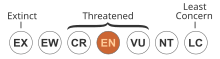
Stupid fucking assholes are eating bonobos and destroying their habitats. There are only 15,000 bonobos left. We need to kill the assholes.

Wild bonobos can only be found in forests south of the Congo River in the Democratic Republic of Congo.

We share an ancestor with chimpanzee apes and bonobo apes.

Bonobos and chimpanzee apes share an ancestor. They became separated by the Congo River and that's why they evolved differently. This is called speciation.

Google:

How many bonobos are left?

15,000-20,000

Bonobos battle bush meat hunting and shrinking habitats

Throughout their range, bonobos are increasingly at risk from human beings, who have killed them off to the point of endangerment. Today there are an estimated 15,000-20,000 wild bonobos remaining.

The endangered bonobo: Africa's forgotten ape

Friday, December 4, 2020

"Life Science" answers this dumb question: Why Haven't All Primates Evolved into Humans?

Why Haven't All Primates Evolved into Humans?

By Grant Currin - Live Science Contributor

July 14, 2019

While we were migrating around the globe, inventing agriculture and visiting the moon, chimpanzees — our closest living relatives — stayed in the trees, where they ate fruit and hunted monkeys.

Modern chimps have been around for longer than modern humans have (less than 1 million years compared to 300,000 for Homo sapiens, according to the most recent estimates), but we've been on separate evolutionary paths for 6 million or 7 million years. If we think of chimps as our cousins, our last common ancestor is like a great, great grandmother with only two living descendants.

But why did one of her evolutionary offspring go on to accomplish so much more than the other? [Chimps vs. Humans: How Are We Different?]

"The reason other primates aren't evolving into humans is that they're doing just fine," Briana Pobiner, a paleoanthropologist at the Smithsonian Institute in Washington, D.C., told Live Science. All primates alive today, including mountain gorillas in Uganda, howler monkeys in the Americas, and lemurs in Madagascar, have proven that they can thrive in their natural habitats.

"Evolution isn't a progression," said Lynne Isbell, a professor of anthropology at the University of California, Davis. "It's about how well organisms fit into their current environments." In the eyes of scientists who study evolution, humans aren't "more evolved" than other primates, and we certainly haven't won the so-called evolutionary game. While extreme adaptability lets humans manipulate very different environments to meet our needs, that ability isn't enough to put humans at the top of the evolutionary ladder.

Take, for instance, ants. "Ants are as or more successful than we are," Isbell told Live Science. "There are so many more ants in the world than humans, and they're well-adapted to where they're living."

While ants haven't developed writing (though they did invent agriculture long before we existed), they're enormously successful insects. They just aren't obviously excellent at all of the things humans tend to care about, which happens to be the things humans excel at.

"We have this idea of the fittest being the strongest or the fastest, but all you really have to do to win the evolutionary game is survive and reproduce," Pobiner said.

Our ancestors' divergence from ancestral chimps is a good example. While we don't have a complete fossil record for humans or chimps, scientists have combined fossil evidence with genetic and behavioral clues gleaned from living primates to learn about the now-extinct species whose descendants would become humans and chimps.

"We don't have its remains, and I'm not sure if we'd be able to place it with certainty in the human lineage it if we did," Isbell said. Scientists think this creature looked more like a chimpanzee than a human, and it probably spent most of its time in the canopy of forests dense enough that it could travel from tree to tree without touching the ground, Isbell said.

Scientists think ancestral humans began distinguishing themselves from ancestral chimps when they started spending more time on the ground. Perhaps our ancestors were looking for food as they explored new habitats, Isbell said.

"Our earliest ancestors that diverged from our common ancestor with chimpanzees would have been adept at both climbing in trees and walking on the ground," Isbell said. It was more recently — maybe 3 million years ago — that these ancestors' legs began to grow longer and their big toes turned forward, allowing them to become mostly full-time walkers.

"Some difference in habitat selection probably would've been the the first notable behavioral change," Isbell said. "To get bipedalism going, our ancestors would have gone into habitats that didn't have closed canopies. They would have had to travel more on the ground in places where trees were more spread out."

The rest is human evolutionary history. As for the chimps, just because they stayed in the trees doesn't mean they stopped evolving. A genetic analysis published in 2010 suggests that their ancestors split from ancestral bonobos 930,000 years ago, and that the ancestors of three living subspecies diverged 460,000 years ago. Central and eastern chimps became distinct only 93,000 years ago.

"They're clearly doing a good job at being chimps," Pobiner said. "They're still around, and as long as we don't destroy their habitat, they probably will be" for many years to come.

Bonobo apes look like human apes because we are their cousins. The only difference is we have less hair and we can play chess.

Two things: The Milky Way Galaxy where I live and my favorite cousin, a bonobo ape.


This blog has 42 posts about Bonobo apes at bonobo apes.

Monday, September 28, 2020

The most interesting fact of science: "Humans, chimpanzees, and bonobos are more closely related to one another than either is to gorillas or any other primate. From the perspective of this powerful test of biological kinship, humans are not only related to the great apes – we are one. The DNA evidence leaves us with one of the greatest surprises in biology: the wall between human, on the one hand, and ape or animal, on the other, has been breached. The human evolutionary tree is embedded within the great apes."

The most interesting fact of science: We are apes.

•••••••••••••••••••••••••••••••••••••

Here in Idiot America where I live, the most recent Gallop poll shows that 40% of Americans think human apes were magically created by a magic god fairy who waved its magic wand to make it happen.

The same poll:

33% of Americans think Jeebus was one of the mechanisms of evolution.

Only 22% of Americans accept evolution without any supernatural magic.

And most of these American idiots don't know we are apes and they would never agree we are apes.

What a waste of a life to not know what you are.

Saturday, August 1, 2020

One of the most interesting facts of science. Humans are apes. The Magic Jeebus Man was an ape. Christians worship a dead ape.

The Australian Museum

Humans are apes – ‘Great Apes’

Humans are classified in the sub-group of primates known as the Great Apes.

Humans are primates, but the primates that we most closely resemble are the apes. We are therefore classified along with all other apes in a primate sub-group known as the hominoids (Superfamily Hominoidea).

This ape group can be further subdivided into the Great Apes and Lesser Apes. Humans have bodies that are genetically and structurally very similar to those of the Great Apes and so we are classified in the Great Apes sub-group which is also known as the hominids (Family Hominidae).

Ape diversity

The first apes evolved about 25 million years ago and by 20 million years ago were a very diverse group. Within the last 10 million years, however, many ape species became extinct as the earth’s climate cooled and dried and their forested environments changed to woodland and grassland. There are now only about 20 living species of apes and they are divided into two major groups. These are the:

Lesser Apes, containing the gibbons

Great Apes, containing the orang-utans, gorillas, chimpanzees and humans

Ape features

Apes (including humans) possess the same general features that all primates share but they differ from other primates in a number of distinctive ways.

Features that separate the apes from other groups of primates include:

a brain that is larger and more complex than other primates
distinctive molar teeth in the lower jaw which have a ‘Y5’ pattern (five cusps or raised bumps arranged in a Y-shape)
a shoulder and arm structure that enables the arms to freely rotate around the shoulder
a ribcage that forms a wide but shallow chest
an appendix
no external tail

The Lesser Apes

There are about 14 species of relatively small-bodied apes known as Lesser Apes. These are the gibbons, which live in trees, rarely descend to the ground and are active during the day. Gibbons are found in the forests of South-east Asia.

The gibbons have the following features:
body size which is similar in males and females
bodies adapted for living in trees which they rarely leave. These adaptations include very long arms with a shoulder structure that enables them to rapidly swing from one branch to the next and long curved finger and toe bones to powerfully grip tree branches
hardened pads of skin (callosites) on their buttocks for prolonged sitting
a diet of fruit or leaves
long, pointed canine teeth and long jaws
a social lifestyle consisting of small family groups consisting of an adult male-female pair and their juvenile offspring

The Great Apes

The Great Apes are named for their large bodies. They also have larger brains than other primates. Like Lesser Apes, the Great Apes are active during the day. There are four types of Great Apes – the orang-utans, gorillas, chimpanzees and humans.

Orang-utans

There are two living species of orang-utan – the Bornean Orang-utan, Pongo pygmaeus, and the Sumatran Orang-utan, Pongo abelii. Orang-utans live in dense rainforests of Borneo and Sumatra in South-east Asia.

Orang-utans have the following features:
considerable sexual dimorphism in which the males are about twice as big as the females
bodies adapted for living in trees which they rarely leave and also for quadrupedal (four-legged) movement on the ground. These adaptations include very long arms with a shoulder structure that enables them to move slowly from branch to branch (especially in young, lighter bodied orang-utans) and long curved finger and toe bones to powerfully grip tree branches
a diet of fruit supplemented by insects
long, pointed canine teeth and long jaws
occasional use of tools, such as twigs and sticks
a solitary lifestyle except when breeding or when mothers have offspring

Gorillas

There are two living species of gorilla – the Western Gorilla, Gorilla gorilla, and the Eastern Gorilla, Gorilla beringei. Gorillas live in dense forests in western and central tropical Africa. Gorillas are the largest of all primates. Their features include:

considerable sexual dimorphism in which the males are about twice as big as the females
bodies adapted for climbing trees (when young) and also for quadrupedal (four-legged) movement on the ground. These adaptations include arms and shoulders that enable them to swing from branch to branch (in lighter bodied, young gorillas); finger and toe bones that are long and curved for gripping tree branches and strongly built to support their large body weight; and knuckle walking’, in which they support themselves on the knuckles of their hands.
a diet of fruit, leaves and shoots
long, pointed canine teeth and long jaws
a social lifestyle in which about 10–20 individuals live in small, permanent groups

Chimpanzees

There are two living species of chimpanzee – the Common Chimpanzee, Pan troglodytes, and the Bonobo or Pygmy Chimpanzee, Pan paniscus. Chimpanzees live in woodland and forests in western and central tropical Africa. Chimpanzees are the smallest of the Great Apes and our closest living relatives. Their features include:

moderate sexual dimorphism in which males are slightly larger than females although this is reduced in Bonobos

bodies adapted for climbing trees and also for quadrupedal (four-legged) movement on the ground. These adaptations include arms and shoulders that enable them to swing from branch to branch (especially in young, lighter bodied chimpanzees); long, curved finger and toe bones to powerfully grip tree branches; and ‘knuckle walking’, in which they support themselves on the knuckles of their hands.

a diet of fruit supplemented by meat
long, pointed canine teeth and long jaws
frequent use of tools, such as sticks, twigs and stones
complex social groups consisting of a dispersed community containing from 10 to 100 or more individuals that often divide into small foraging groups with a constantly changing membership of about 3–10 individuals

Humans

There is only one living species of human – Modern Humans, Homo sapiens. Humans now live in almost every part of the world.

Monday, July 13, 2020

I think this is the most interesting fact of science: We are apes.

"Geneticists have come up with a variety of ways of calculating the percentages, which give different impressions about how similar chimpanzees and humans are. The 1.2% chimp-human distinction, for example, involves a measurement of only substitutions in the base building blocks of those genes that chimpanzees and humans share. A comparison of the entire genome, however, indicates that segments of DNA have also been deleted, duplicated over and over, or inserted from one part of the genome into another. When these differences are counted, there is an additional 4 to 5% distinction between the human and chimpanzee genomes."

"No matter how the calculation is done, the big point still holds: humans, chimpanzees, and bonobos are more closely related to one another than either is to gorillas or any other primate. From the perspective of this powerful test of biological kinship, humans are not only related to the great apes – we are one. The DNA evidence leaves us with one of the greatest surprises in biology: the wall between human, on the one hand, and ape or animal, on the other, has been breached. The human evolutionary tree is embedded within the great apes."

The Smithsonian National Museum of Natural History.
http://humanorigins.si.edu/evidence/genetics

••••••••••••••••••••••••••••••••••••••••••••••••••••••••••••

Here is the whole thing:

Through news accounts and crime stories, we’re all familiar with the fact that the DNA in our cells reflects each individual’s unique identity and how closely related we are to one another. The same is true for the relationships among organisms. DNA, or deoxyribonucleic acid, is the molecule that makes up an organism’s genome in the nucleus of every cell. It consists of genes, which are the molecular codes for proteins – the building blocks of our tissues and their functions. It also consists of the molecular codes that regulate the output of genes – that is, the timing and degree of protein-making. DNA shapes how an organism grows up and the physiology of its blood, bone, and brains.

DNA is thus especially important in the study of evolution. The amount of difference in DNA is a test of the difference between one species and another – and thus how closely or distantly related they are.

While the genetic difference between individual humans today is minuscule – about 0.1%, on average – study of the same aspects of the chimpanzee genome indicates a difference of about 1.2%. The bonobo (Pan paniscus), which is the close cousin of chimpanzees (Pan troglodytes), differs from humans to the same degree. The DNA difference with gorillas, another of the African apes, is about 1.6%. Most importantly, chimpanzees, bonobos, and humans all show this same amount of difference from gorillas. A difference of 3.1% distinguishes us and the African apes from the Asian great ape, the orangutan. How do the monkeys stack up? All of the great apes and humans differ from rhesus monkeys, for example, by about 7% in their DNA.

Geneticists have come up with a variety of ways of calculating the percentages, which give different impressions about how similar chimpanzees and humans are. The 1.2% chimp-human distinction, for example, involves a measurement of only substitutions in the base building blocks of those genes that chimpanzees and humans share. A comparison of the entire genome, however, indicates that segments of DNA have also been deleted, duplicated over and over, or inserted from one part of the genome into another. When these differences are counted, there is an additional 4 to 5% distinction between the human and chimpanzee genomes.

No matter how the calculation is done, the big point still holds: humans, chimpanzees, and bonobos are more closely related to one another than either is to gorillas or any other primate. From the perspective of this powerful test of biological kinship, humans are not only related to the great apes – we are one. The DNA evidence leaves us with one of the greatest surprises in biology: the wall between human, on the one hand, and ape or animal, on the other, has been breached. The human evolutionary tree is embedded within the great apes.

The strong similarities between humans and the African great apes led Charles Darwin in 1871 to predict that Africa was the likely place where the human lineage branched off from other animals – that is, the place where the common ancestor of chimpanzees, humans, and gorillas once lived. The DNA evidence shows an amazing confirmation of this daring prediction. The African great apes, including humans, have a closer kinship bond with one another than the African apes have with orangutans or other primates. Hardly ever has a scientific prediction so bold, so ‘out there’ for its time, been upheld as the one made in 1871 – that human evolution began in Africa.

The DNA evidence informs this conclusion, and the fossils do, too. Even though Europe and Asia were scoured for early human fossils long before Africa was even thought of, ongoing fossil discoveries confirm that the first 4 million years or so of human evolutionary history took place exclusively on the African continent. It is there that the search continues for fossils at or near the branching point of the chimpanzee and human lineages from our last common ancestor.

Saturday, July 11, 2020

"Commercial poaching is the most prominent threat." The solution is obvious. Torture and kill the poachers. Do not take any prisoners. Just kill them. If they beg for mercy, kill them. If these assholes are not killed, there will be zero bonobos on this planet. The assholes have to be killed.

Bonobo[1]
Temporal range: Early Pleistocene – Holocene 
O
S
D
C
P
T
J
K
N
Apeldoorn Apenheul zoo Bonobo.jpg
Male at Apenheul Primate Park
Scientific classificationedit
Kingdom:Animalia
Phylum:Chordata
Class:Mammalia
Order:Primates
Suborder:Haplorhini
Infraorder:Simiiformes
Family:Hominidae
Subfamily:Homininae
Tribe:Hominini
Genus:Pan
Species:
P. paniscus
Binomial name
Pan paniscus
Schwarz, 1929
Bonobo distribution.svg
Bonobo distribution

Wikipedia - Bonobo

The bonobo (/bəˈnoʊboʊ, ˈbɒnəboʊ/; Pan paniscus), also historically called the pygmy chimpanzee and less often, the dwarf or gracile chimpanzee, is an endangered great ape and one of the two species making up the genus Pan; the other being the common chimpanzee (Pan troglodytes). Although bonobos are not a subspecies of chimpanzee (Pan troglodytes), but rather a distinct species in their own right, both species are sometimes referred to collectively using the generalized term chimpanzees, or chimps. Taxonomically, the members of the chimpanzee/bonobo subtribe Panina (comprised entirely by the genus Pan) are collectively termed panins.

The bonobo is distinguished by relatively long legs, pink lips, dark face, tail-tuft through adulthood, and parted long hair on its head. The bonobo is found in a 500,000 km2 (190,000 sq mi) area of the Congo Basin in the Democratic Republic of the Congo, Central Africa. The species is omnivorous and inhabits primary and secondary forests, including seasonally inundated swamp forests. Because of political instability in the region and the timidity of bonobos, there has been relatively little field work done observing the species in its natural habitat.

Along with the common chimpanzee, the bonobo is the closest extant relative to humans. As the two species are not proficient swimmers, the formation of the Congo River 1.5–2 million years ago possibly led to the speciation of the bonobo. Bonobos live south of the river, and thereby were separated from the ancestors of the common chimpanzee, which live north of the river. There are no concrete data on population numbers, but the estimate is between 29,500 and 50,000 individuals. The species is listed as Endangered on the IUCN Red List and is threatened by habitat destruction and human population growth and movement, though 
commercial poaching is the most prominent threat."Bonobos typically live 40 years in captivity; their lifespan in the wild is unknown, but it is almost certainly much shorter.

Some assholes need to be killed.

https://www.smithsonianmag.com/science-nature/bonobos-teach-humans-about-nature-language-180975191/

The rainforests in the Congo River Basin that are home to most of the remaining 20,000 wild bonobos are being torched by palm oil companies to clear the ground for plantations. Demand for the product, which is used in half of all packaged food items in American supermarkets, from pizza dough to ramen noodles, is skyrocketing. Bonobos, already threatened by poachers and loggers, are suffocating in the fires.

Monday, May 18, 2020

If you're a Christian moron you need to read this.

Humans share an ancestor with chimpanzee apes. When our ancestors separated from the ancestors of chimps, we evolved differently. Humans have a larger brain (which Christians never use) and chimps are much stronger than we are.

Chimpanzees evolved from ancient apes and they are still apes.

Humans evolved from ancient apes and we are still apes. Humans are one of the Great Ape species. We are apes. We are most closely related to chimpanzee apes and bonobo apes.

Another interesting fact: Chimpanzee apes are more closely related to human apes than they are to gorilla apes and orangutan apes. That makes us right in the middle of this family of the Great Apes.

Everything I wrote are scientific facts supported by thousands of evidences from DNA sequencing, and thousands more evidences from numerous other branches of science.

You can deny these strongest facts of science but they are still facts.

What are the religious implications?

Your dead Magic Jeebus Man was an ape. You morons worship a dead ape.

I suggest, Christain fucktards, it's about time for you to grow up and face facts. Your ridiculous cult needs to be thrown out.

But you won't throw out your favorite dead ape because reality makes you cowards cry.

Tuesday, December 3, 2019

Everything you always wanted to know about human apes and the other ape species.

The Australian Museum - Humans are apes – ‘Great Apes’

Author - Beth Blaxland

Humans are classified in the sub-group of primates known as the Great Apes.

Humans are primates, but the primates that we most closely resemble are the apes. We are therefore classified along with all other apes in a primate sub-group known as the hominoids (Superfamily Hominoidea).

This ape group can be further subdivided into the Great Apes and Lesser Apes. Humans have bodies that are genetically and structurally very similar to those of the Great Apes and so we are classified in the Great Apes sub-group which is also known as the hominids (Family Hominidae).

Ape diversity

The first apes evolved about 25 million years ago and by 20 million years ago were a very diverse group. Within the last 10 million years, however, many ape species became extinct as the earth’s climate cooled and dried and their forested environments changed to woodland and grassland. There are now only about 20 living species of apes and they are divided into two major groups. These are the:

Lesser Apes, containing the gibbons

Great Apes, containing the orang-utans, gorillas, chimpanzees and humans

Ape features

Apes (including humans) possess the same general features that all primates share but they differ from other primates in a number of distinctive ways.

Features that separate the apes from other groups of primates include:
a brain that is larger and more complex than other primates
distinctive molar teeth in the lower jaw which have a ‘Y5’ pattern (five cusps or raised bumps arranged in a Y-shape)

a shoulder and arm structure that enables the arms to freely rotate around the shoulder

a ribcage that forms a wide but shallow chest

an appendix

no external tail

The Lesser Apes

There are about 14 species of relatively small-bodied apes known as Lesser Apes. These are the gibbons, which live in trees, rarely descend to the ground and are active during the day. Gibbons are found in the forests of South-east Asia.

The gibbons have the following features:

body size which is similar in males and females

bodies adapted for living in trees which they rarely leave. These adaptations include very long arms with a shoulder structure that enables them to rapidly swing from one branch to the next and long curved finger and toe bones to powerfully grip tree branches

hardened pads of skin (callosites) on their buttocks for prolonged sitting

a diet of fruit or leaves

long, pointed canine teeth and long jaws

a social lifestyle consisting of small family groups consisting of an adult male-female pair and their juvenile offspring

The Great Apes

The Great Apes are named for their large bodies. They also have larger brains than other primates. Like Lesser Apes, the Great Apes are active during the day. There are four types of Great Apes – the orang-utans, gorillas, chimpanzees and humans.

Orang-utans

There are two living species of orang-utan – the Bornean Orang-utan, Pongo pygmaeus, and the Sumatran Orang-utan, Pongo abelii. Orang-utans live in dense rainforests of Borneo and Sumatra in South-east Asia.

Orang-utans have the following features:

considerable sexual dimorphism in which the males are about twice as big as the females

bodies adapted for living in trees which they rarely leave and also for quadrupedal (four-legged) movement on the ground. These adaptations include very long arms with a shoulder structure that enables them to move slowly from branch to branch (especially in young, lighter bodied orang-utans) and long curved finger and toe bones to powerfully grip tree branches

a diet of fruit supplemented by insects

long, pointed canine teeth and long jaws

occasional use of tools, such as twigs and sticks

a solitary lifestyle except when breeding or when mothers have offspring

Gorillas

There are two living species of gorilla – the Western Gorilla, Gorilla gorilla, and the Eastern Gorilla, Gorilla beringei. Gorillas live in dense forests in western and central tropical Africa. Gorillas are the largest of all primates. Their features include:

considerable sexual dimorphism in which the males are about twice as big as the females

bodies adapted for climbing trees (when young) and also for quadrupedal (four-legged) movement on the ground. These adaptations include arms and shoulders that enable them to swing from branch to branch (in lighter bodied, young gorillas); finger and toe bones that are long and curved for gripping tree branches and strongly built to support their large body weight; and knuckle walking’, in which they support themselves on the knuckles of their hands.

a diet of fruit, leaves and shoots

long, pointed canine teeth and long jaws

a social lifestyle in which about 10–20 individuals live in small, permanent groups

Chimpanzees

There are two living species of chimpanzee – the Common Chimpanzee, Pan troglodytes, and the Bonobo or Pygmy Chimpanzee, Pan paniscus. Chimpanzees live in woodland and forests in western and central tropical Africa. Chimpanzees are the smallest of the Great Apes and our closest living relatives. Their features include:

moderate sexual dimorphism in which males are slightly larger than females although this is reduced in Bonobos

bodies adapted for climbing trees and also for quadrupedal (four-legged) movement on the ground. These adaptations include:arms and shoulders that enable them to swing from branch to branch (especially in young, lighter bodied chimpanzees); long, curved finger and toe bones to powerfully grip tree branches; and ‘knuckle walking’, in which they support themselves on the knuckles of their hands.

a diet of fruit supplemented by meat

long, pointed canine teeth and long jaws

frequent use of tools, such as sticks, twigs and stones

complex social groups consisting of a dispersed community containing from 10 to 100 or more individuals that often divide into small foraging groups with a constantly changing membership of about 3–10 individuals

Humans

There is only one living species of human – Modern Humans, Homo sapiens. Humans now live in almost every part of the world.

Thursday, November 7, 2019

For me this is the most interesting fact of science: Humans are apes.

Australian Museum - Humans are apes – ‘Great Apes’

Author: Beth Blaxland

Updated December 12, 2018


This a cast of a male gorilla, Gorilla gorilla, skull.
Humans are classified in the sub-group of primates known as the Great Apes.

Humans are primates, but the primates that we most closely resemble are the apes. We are therefore classified along with all other apes in a primate sub-group known as the hominoids (Superfamily Hominoidea).

This ape group can be further subdivided into the Great Apes and Lesser Apes. Humans have bodies that are genetically and structurally very similar to those of the Great Apes and so we are classified in the Great Apes sub-group which is also known as the hominids (Family Hominidae).


Ape diversity

The first apes evolved about 25 million years ago and by 20 million years ago were a very diverse group. Within the last 10 million years, however, many ape species became extinct as the earth’s climate cooled and dried and their forested environments changed to woodland and grassland. There are now only about 20 living species of apes and they are divided into two major groups. These are the:

Lesser Apes, containing the gibbons

Great Apes, containing the orang-utans, gorillas, chimpanzees and humans
Ape features

Apes (including humans) possess the same general features that all primates share but they differ from other primates in a number of distinctive ways.

Features that separate the apes from other groups of primates include:

a brain that is larger and more complex than other primates
distinctive molar teeth in the lower jaw which have a ‘Y5’ pattern (five cusps or raised bumps arranged in a Y-shape)
a shoulder and arm structure that enables the arms to freely rotate around the shoulder
a ribcage that forms a wide but shallow chest
an appendix
no external tail

The Lesser Apes

There are about 14 species of relatively small-bodied apes known as Lesser Apes. These are the gibbons, which live in trees, rarely descend to the ground and are active during the day. Gibbons are found in the forests of South-east Asia.

The gibbons have the following features:

body size which is similar in males and females
bodies adapted for living in trees which they rarely leave. These adaptations include very long arms with a shoulder structure that enables them to rapidly swing from one branch to the next and long curved finger and toe bones to powerfully grip tree branches
hardened pads of skin (callosites) on their buttocks for prolonged sitting
a diet of fruit or leaves
long, pointed canine teeth and long jaws
a social lifestyle consisting of small family groups consisting of an adult male-female pair and their juvenile offspring

The Great Apes

The Great Apes are named for their large bodies. They also have larger brains than other primates. Like Lesser Apes, the Great Apes are active during the day. There are four types of Great Apes – the orang-utans, gorillas, chimpanzees and humans.

Orang-utans

There are two living species of orang-utan – the Bornean Orang-utan, Pongo pygmaeus, and the Sumatran Orang-utan, Pongo abelii. Orang-utans live in dense rainforests of Borneo and Sumatra in South-east Asia.

Orang-utans have the following features:

considerable sexual dimorphism in which the males are about twice as big as the females
bodies adapted for living in trees which they rarely leave and also for quadrupedal (four-legged) movement on the ground. These adaptations include very long arms with a shoulder structure that enables them to move slowly from branch to branch (especially in young, lighter bodied orang-utans) and long curved finger and toe bones to powerfully grip tree branches
a diet of fruit supplemented by insects
long, pointed canine teeth and long jaws
occasional use of tools, such as twigs and sticks
a solitary lifestyle except when breeding or when mothers have offspring

Gorillas

There are two living species of gorilla – the Western Gorilla, Gorilla gorilla, and the Eastern Gorilla, Gorilla beringei. Gorillas live in dense forests in western and central tropical Africa. Gorillas are the largest of all primates. Their features include:

considerable sexual dimorphism in which the males are about twice as big as the females
bodies adapted for climbing trees (when young) and also for quadrupedal (four-legged) movement on the ground. These adaptations include arms and shoulders that enable them to swing from branch to branch (in lighter bodied, young gorillas); finger and toe bones that are long and curved for gripping tree branches and strongly built to support their large body weight; and knuckle walking’, in which they support themselves on the knuckles of their hands.
a diet of fruit, leaves and shoots
long, pointed canine teeth and long jaws
a social lifestyle in which about 10–20 individuals live in small, permanent groups

Chimpanzees

There are two living species of chimpanzee – the Common Chimpanzee, Pan troglodytes, and the Bonobo or Pygmy Chimpanzee, Pan paniscus. Chimpanzees live in woodland and forests in western and central tropical Africa. Chimpanzees are the smallest of the Great Apes and our closest living relatives. Their features include:

moderate sexual dimorphism in which males are slightly larger than females although this is reduced in Bonobos
bodies adapted for climbing trees and also for quadrupedal (four-legged) movement on the ground. These adaptations include:arms and shoulders that enable them to swing from branch to branch (especially in young, lighter bodied chimpanzees); long, curved finger and toe bones to powerfully grip tree branches; and ‘knuckle walking’, in which they support themselves on the knuckles of their hands.
a diet of fruit supplemented by meat
long, pointed canine teeth and long jaws
frequent use of tools, such as sticks, twigs and stones
complex social groups consisting of a dispersed community containing from 10 to 100 or more individuals that often divide into small foraging groups with a constantly changing membership of about 3–10 individuals

Humans

There is only one living species of human – Modern Humans, Homo sapiens. Humans now live in almost every part of the world.

Friday, October 11, 2019

Bonobos: "Commercial poaching is the most prominent threat." It's not enough to kill these stupid fucking assholes. They should be tortured first and then killed.

Wikipedia - Bonobo

The bonobo (/bəˈnoʊboʊ, ˈbɒnəboʊ/; Pan paniscus), also historically called the pygmy chimpanzee and less often, the dwarf or gracile chimpanzee,[3] is an endangered great ape and one of the two species making up the genus Pan; the other being the common chimpanzee (Pan troglodytes).[4] Although bonobos are not a subspecies of chimpanzee (Pan troglodytes), but rather a distinct species in their own right, both species are sometimes referred to collectively using the generalized term chimpanzees, or chimps. Taxonomically, the members of the chimpanzee/bonobo subtribe Panina (comprised entirely by the genus Pan) are collectively termed panins.[5][6]

The bonobo is distinguished by relatively long legs, pink lips, dark face and tail-tuft through adulthood, and parted long hair on its head. The bonobo is found in a 500,000 km2 (190,000 sq mi) area of the Congo Basin in the Democratic Republic of the Congo, Central Africa. The species is omnivorous and inhabits primary and secondary forests, including seasonally inundated swamp forests. Because of political instability in the region and the timidity of bonobos, there has been relatively little field work done observing the species in its natural habitat.

Along with the common chimpanzee, the bonobo is the closest extant relative to humans.[4] As the two species are not proficient swimmers, the formation of the Congo River 1.5–2 million years ago possibly led to the speciation of the bonobo. Bonobos live south of the river, and thereby were separated from the ancestors of the common chimpanzee, which live north of the river. There are no concrete data on population numbers, but the estimate is between 29,500 and 50,000 individuals. The species is listed as Endangered on the IUCN Red List and is threatened by habitat destruction and human population growth and movement, though commercial poaching is the most prominent threat. They typically live 40 years in captivity;[7] their lifespan in the wild is unknown.

Wednesday, October 9, 2019

What does it mean to be human?

I think this is the most interesting fact of science. People are apes.

This scientific fact, we are one of the Great Ape species, also has the advantage of making American Christian fucktards cry.

"No matter how the calculation is done, the big point still holds: humans, chimpanzees, and bonobos are more closely related to one another than either is to gorillas or any other primate. From the perspective of this powerful test of biological kinship, humans are not only related to the great apes – we are one. The DNA evidence leaves us with one of the greatest surprises in biology: the wall between human, on the one hand, and ape or animal, on the other, has been breached. The human evolutionary tree is embedded within the great apes."

The whole very interesting thing is at https://darwinkilledgod.blogspot.com/2019/02/the-dna-evidence-leaves-us-with-one-of.html

Saturday, October 5, 2019

"Evolution isn't a progression. It's about how well organisms fit into their current environments. Humans aren't more evolved than other primates."

"A fly is just as evolved as a human. It's just evolved to a different niche."
-- Jeremy Niven

"Humans aren't high on the evolutionary scale...there is no evolutionary scale. We aren't the pinnacle of anything."
-- PZ Myers

Why Haven't All Primates Evolved into Humans?

By Grant Currin - Live Science Contributor July 14, 2019 Animals

While we were migrating around the globe, inventing agriculture and visiting the moon, chimpanzees — our closest living relatives — stayed in the trees, where they ate fruit and hunted monkeys.

Modern chimps have been around for longer than modern humans have (less than 1 million years compared to 300,000 for Homo sapiens, according to the most recent estimates), but we've been on separate evolutionary paths for 6 million or 7 million years. If we think of chimps as our cousins, our last common ancestor is like a great, great grandmother with only two living descendants.

But why did one of her evolutionary offspring go on to accomplish so much more than the other? [Chimps vs. Humans: How Are We Different?]

"The reason other primates aren't evolving into humans is that they're doing just fine," Briana Pobiner, a paleoanthropologist at the Smithsonian Institute in Washington, D.C., told Live Science. All primates alive today, including mountain gorillas in Uganda, howler monkeys in the Americas, and lemurs in Madagascar, have proven that they can thrive in their natural habitats.

"Evolution isn't a progression," said Lynne Isbell, a professor of anthropology at the University of California, Davis. "It's about how well organisms fit into their current environments." In the eyes of scientists who study evolution, humans aren't "more evolved" than other primates, and we certainly haven't won the so-called evolutionary game. While extreme adaptability lets humans manipulate very different environments to meet our needs, that ability isn't enough to put humans at the top of the evolutionary ladder.

Take, for instance, ants. "Ants are as or more successful than we are," Isbell told Live Science. "There are so many more ants in the world than humans, and they're well-adapted to where they're living."

While ants haven't developed writing (though they did invent agriculture long before we existed), they're enormously successful insects. They just aren't obviously excellent at all of the things humans tend to care about, which happens to be the things humans excel at.

"We have this idea of the fittest being the strongest or the fastest, but all you really have to do to win the evolutionary game is survive and reproduce," Pobiner said.

Our ancestors' divergence from ancestral chimps is a good example. While we don't have a complete fossil record for humans or chimps, scientists have combined fossil evidence with genetic and behavioral clues gleaned from living primates to learn about the now-extinct species whose descendants would become humans and chimps.

"We don't have its remains, and I'm not sure if we'd be able to place it with certainty in the human lineage it if we did," Isbell said. Scientists think this creature looked more like a chimpanzee than a human, and it probably spent most of its time in the canopy of forests dense enough that it could travel from tree to tree without touching the ground, Isbell said.

Scientists think ancestral humans began distinguishing themselves from ancestral chimps when they started spending more time on the ground. Perhaps our ancestors were looking for food as they explored new habitats, Isbell said.

"Our earliest ancestors that diverged from our common ancestor with chimpanzees would have been adept at both climbing in trees and walking on the ground," Isbell said. It was more recently — maybe 3 million years ago — that these ancestors' legs began to grow longer and their big toes turned forward, allowing them to become mostly full-time walkers.

"Some difference in habitat selection probably would've been the the first notable behavioral change," Isbell said. "To get bipedalism going, our ancestors would have gone into habitats that didn't have closed canopies. They would have had to travel more on the ground in places where trees were more spread out."

The rest is human evolutionary history. As for the chimps, just because they stayed in the trees doesn't mean they stopped evolving. A genetic analysis published in 2010 suggests that their ancestors split from ancestral bonobos 930,000 years ago, and that the ancestors of three living subspecies diverged 460,000 years ago. Central and eastern chimps became distinct only 93,000 years ago.

"They're clearly doing a good job at being chimps," Pobiner said. "They're still around, and as long as we don't destroy their habitat, they probably will be" for many years to come.

Could Evolution Ever Bring Back the Dinosaurs?
Why Humans Outlive Apes
Why Do Some Animals Eat Their Own Poop?

Monday, July 15, 2019

Our evolutionary relationship with chimpanzees makes Idiot America's Christian fucktards cry.

"No matter how the calculation is done, the big point still holds: humans, chimpanzees, and bonobos are more closely related to one another than either is to gorillas or any other primate. From the perspective of this powerful test of biological kinship, humans are not only related to the great apes – we are one. The DNA evidence leaves us with one of the greatest surprises in biology: the wall between human, on the one hand, and ape or animal, on the other, has been breached. The human evolutionary tree is embedded within the great apes."

http://humanorigins.si.edu/evidence/genetics