Saturday, May 1, 2021


Friday, April 16, 2021
At War: The end of the United States’ Forever War. New York Times. April 16, 2021.
The End of the United States’ Forever War |
 | Reporter |
Dear Reader, |
Wesley Morgan’s recently released book about the U.S.-led war in Afghanistan, “The Hardest Place: The American Military Adrift in Afghanistan’s Pech Valley,” is unique in its completeness. Arguably, it is the closest any book about the American war in Afghanistan has come to capturing what transpired in a slice of territory occupied by U.S. forces. |
It is especially relevant now, in the wake of President Biden’s announcement that all American troops will withdraw from the country by September. Books like Morgan’s will serve as the epitaphs for the failures of the American military in its two-decade-long war. |
|

Thousands of troops passed through the Pech in Afghanistan’s violent east, where famous documentaries and films were born and the Korengal Valley turned practically into a household name. The soldiers there built and tore down outposts. Went on hundreds of patrols. Fought and died. Morgan, a military affairs reporter, documents it all from the beginning to the end, a herculean task in a conflict that has gone on for so long, and with characters who continuously rotated in and out every few months. These men and women all left their own marks on a military strategy that was never understood or clearly defined. |
Morgan spoke with The Times about the book and what he thinks comes next in the Pech after the United States leaves Afghanistan. |
What was the main event that spurred you to write the book? |
I first went to the Pech in 2010 — when I was a freelancer and I was still in college — for an embed with a battalion from the 101st Airborne Division. That visit just got me obsessed. It was my fourth reporting trip to the wars, and I think the 12th battalion I’d embedded with in a combat situation, but the fighting in the Pech was just so different, with the amount of artillery being fired, the restrictive terrain, the gunfights and how outrageous the terrain was. |
And at these little outposts, like COP Michigan at the mouth of the Korengal, which was the most frequently and heavily attacked outpost in eastern Afghanistan at the time, nobody really knew when or why they’d been built, even though it had just been a few years earlier. |
Initially it was for a senior thesis project that I turned in a decade ago — I helped break the news of the imminent U.S. pullout from the Pech in 2011 in a story for this paper with C. J. Chivers and Alissa Rubin because I stumbled onto the information while doing that thesis research. And then later it was for this book, as I kept going back to Afghanistan and U.S. troops got sucked back into the Pech. |
What kind of feedback has the book gotten so far? |
The first thing that struck me was how many of the reviews were being written by military veterans. Then what blew me away was a pair of reviews, both by Afghanistan infantry veterans, in two publications that both cover war but with drastically different audiences, and the reviews had quite a bit in common. And a big part of what they had in common was a sense of bitterness over how a lot of heroic fighting had been built on really shaky foundations in terms of the intelligence and assumptions and decisions that led us into these valleys, and grief over how casualties had mounted as military units continually reinvented the wheel and kept flying back up to the same villages in the same valleys to go looking for firefights year after year, without a lot of knowledge being passed down or absorbed. |
|

What happens after the U.S. completely withdraws from Afghanistan? |
I think in the Pech and its tributaries, we’re already well into the post-withdrawal phase. It’s been this way at a bunch of points in the story: The U.S. embraced the counterinsurgency outpost in the Pech a couple of years before it did in other places like Kandahar and Helmand. And then when the surge was underway in those places, the battalion I first visited in the Pech was saying, “This isn’t working, time to leave,” and they did — only for them to get sucked back out there and have to reopen some of the bases, as would wind up happening in a lot of parts of Afghanistan a few years later during Trump’s mini surge. |
So I think for the Pech and its tributaries, the post-2021 future is already happening. The government and the Taliban are fighting each other, but they’re also observing truces with each other and finding ways to accommodate one another on governance and especially on fighting ISIS, which is their mutual enemy. |
How does this bode for the U.S. counterterrorism strategy in the region? |
The U.S. has kind of outsourced our counterterrorism mission against ISIS to this weird Taliban-government partnership, to the extent that in the months before the Doha deal, the Rangers were actually using Reaper strikes to help the Taliban fight ISIS. I wrote in the book that there was a Ranger targeting team that jokingly called themselves the “Taliban Air Force” because of this, and since the book came out someone told me they even had a “Taliban Air Force” sign in their ops center, which is a detail I wish I could’ve included. |
We’re going to be seeing in the months ahead whether the Taliban is willing to kind of act as our surrogate for counterterrorism like that in other parts of the country — I think where ISIS is concerned, they will, but it seems pretty clear that where Al Qaeda is concerned, they won’t. |
This interview has been condensed and edited for clarity. |
Thomas Gibbons-Neff is a correspondent in the Kabul bureau and a former Marine infantryman. |
Afghan War Casualty Report: April 2021 |
|

At least 147 pro-government forces and 25 civilians have been killed so far this month. [Read the casualty report.] |
We would love your feedback on this newsletter. Please email thoughts and suggestions to atwar@nytimes.com. Or invite someone to subscribe through this link. Read more from At War here, or follow us on Twitter. |
Editor’s Picks |
Here are five articles from The Times that you might have missed. |
|

“As good as our intelligence and over-the-horizon capabilities are, there is no substitute for being there.” Drones, long-range bombers and spy networks will be used by the United States and Western allies in an effort to prevent Afghanistan from re-emerging as a terrorist base after American troops leave the country. [Read the article.] |
“I am so worried about my future. It seems so murky. If the Taliban take over, I lose my identity.” Many Afghans fear that without the umbrella of U.S. protection, the country will be unable to preserve its modest gains toward democracy and women’s rights. [Read the article.] |
“He’s dealing with the kiss of death from his own closest partner.” The Taliban are gaining militarily in Afghanistan, and President Ashraf Ghani’s international supporters are impatient with the stumbling peace process. [Read the article.] |
“There’s no easy answer, no victory dance, no ‘we were right and they were wrong.’” Was it worth it? After two decades of midnight watches and gut-twisting patrols, after all of the deaths and bloodshed and lost years, that is the one inescapable question among many of the 800,000 Americans who have served in Afghanistan since 2001. [Read the article.] |
“The I.S.I., with the help of America, defeated America.” Pakistan’s military stayed allied to both the Americans and Taliban. But now the country may face intensified extremism at home as a result of a perceived Taliban victory. [Read the article.] |
Wednesday, April 14, 2021
"Afghanistan’s destiny will look like it did two decades ago.” The United States doesn't care and that's a good thing. We can't fix Muslim stupidity.
Afghans Wonder ‘What About Us?’ as U.S. Troops Prepare to Withdraw
Many Afghans fear that without the umbrella of American protection, the country will be unable to preserve its modest gains toward democracy and women’s rights.
By Thomas Gibbons-Neff
April 14, 2021
KABUL, Afghanistan — A female high school student in Kabul, Afghanistan’s war-scarred capital, is worried that she won’t be allowed to graduate. A pomegranate farmer in Kandahar wonders if his orchards will ever be clear of Taliban land mines. A government soldier in Ghazni fears he will never stop fighting.
Three Afghans from disparate walks of life, now each asking the same question: What will become of me when the Americans leave?
President Biden on Wednesday vowed to withdraw all American troops by Sept. 11, 20 years after the first Americans arrived to drive out Al Qaeda following the 2001 terrorist attacks. “War in Afghanistan was never meant to be a multigenerational undertaking,” he said, speaking from the White House.
The American withdrawal would end the longest war in United States history, but it is also likely to be the start of another difficult chapter for Afghanistan’s people.
“I am so worried about my future. It seems so murky. If the Taliban take over, I lose my identity,” said Wahida Sadeqi, 17, an 11th grader at Pardis High School in Kabul. “It is about my existence. It is not about their withdrawal. I was born in 2004 and I have no idea what the Taliban did to women, but I know women were banned from everything.”
Uncertainty hangs over virtually every facet of life in Afghanistan. It is unclear what the future holds and if the fighting will ever stop. For two decades, American leaders have pledged peace, prosperity, democracy, the end of terrorism and rights for women. Few of those promises have materialized in vast areas of Afghanistan, but now even in the cities where real progress occurred, there is fear that everything will be lost when the Americans leave.
The Taliban, the extremist group that once controlled most of the country and continues to fight the government, insist that the elected president step down. Militias are increasing in prominence and power, and there is talk of civil war after the U.S. withdrawal.
Afghans watched with cautious optimism when Mr. Biden assumed office in January. Many had hoped he would reverse the Trump administration’s rushed pledge to withdraw all U.S. troops by May after brokering a shaky peace deal with the Taliban last year.
Afghan leaders were convinced that the new American president would be a better ally, who would not immediately withdraw the troops that have helped keep the Taliban at bay and out of major cities.
Since the Afghan government and the Taliban began peace talks in Qatar late last year, fighting between them has surged, along with civilian casualties. On Wednesday, the United Nations’ mission in Afghanistan reported that in the first three months of the year there were 573 civilians killed and 1,210 wounded, a 29 percent increase over the same period in 2020. More than 40,000 civilians have been killed since the start of the war.
Over two decades, the American mission evolved from hunting terrorists to helping the government build the institutions of a functioning government, dismantle the Taliban and empower women. But the U.S. and Afghan militaries were never able to effectively destroy the Taliban, allowing the insurgents to stage a comeback.
The Taliban never recognized Afghanistan’s democratic government. And they appear closer than ever to achieving the goal of their insurgency: to return to power and establish a government based on their extremist view of Islam.
Women would be most at risk under Taliban rule. When the group controlled Afghanistan from 1996 to 2001, it banned women from taking most jobs or receiving educations and practically made them prisoners in their own homes.
“It is too early to comment on the subject. We need to know much more,” said Fatima Gailani, an Afghan government negotiator who is involved in the continuing peace talks with the Taliban. “One thing is certain: It is about time that we learn how to rely on ourselves. Women of Afghanistan are totally different now. They are a force in our country; no one can deny them their rights or status.”
Afghanistan’s shaky democracy — propped up by billions of American dollars — has given way to an educated urban class that includes women like Ms. Gailani. Many of them were born in Afghanistan in the 1990s and came of age during the U.S. occupation of the country. Now these women are journalists, part of civil society and members of government.
In the countryside, by contrast, fighting, poverty and oppression remain regular parts of life. Despite the challenges, residents found some comfort in knowing that Afghan forces, backed by the American military, were keeping the peace at least in some areas.
Haji Abdul Samad, 52, a pomegranate farmer from the Arghandab district of Kandahar Province, has been displaced from his home for two months because of the heavy fighting there.
“I am too tired of my life. We are now in a position to beg,” Mr. Samad said. “The Americans are responsible for the troubles, hardships that we are going through. Now they are going to leave with their troops, with no peace, no progress. They just want to leave their war behind.”
Fears about the future are as palpable in the presidential palace in Kabul as they are in far-flung corners of the country. And people across Afghanistan are confused about who will soon be in charge.
The Taliban have repeatedly called for President Ashraf Ghani to step down to make way for an interim government, or most likely, their own. Mr. Ghani has refused, instead pushing for elections but also opening the door to more fighting and a potential civil war. The peace talks in Qatar have faltered and the Taliban have all but backed out of proposed talks in Turkey.
“Ghani will be increasingly isolated. Power brokers see every one of his moves as designed to keep himself and his deputies at the helm,” said Torek Farhadi, an adviser to former President Hamid Karzai. “Reality is, free and fair elections are not possible in the country amid war. In fact, it could fuel more violence.”
As American troops prepare to leave and fractures form in the Afghan government, militias controlled by powerful local warlords are once more rising to prominence and attacking government forces.
The American withdrawal will undoubtedly be a massive blow to morale for the Afghan security forces, spread across the country at hundreds of checkpoints, inside bases and along violent front lines. For years, the U.S. presence has meant that American air power, if needed, was nearby. But since the Trump administration’s deal with the Taliban, those airstrikes have become much less frequent, occurring only in the most dire of situations.
Without American military support, Afghan government troops are up against a Taliban enemy who is frequently more experienced and better equipped than the average foot soldier.
The history of Afghanistan has been one of foreign invasion and withdrawal: the British in the 19th century and the Soviets in the 20th. After each invasion, the country underwent a period of infighting and civil war.
“It is not the right time to withdraw their troops,” said Major Saifuddin Azizi, a commando commander in the southeastern province of Ghazni, where fighting has been especially brutal in recent days. “It is unreasonable, hasty and a betrayal to us. It pushes Afghanistan into another civil war. Afghanistan’s destiny will look like it did two decades ago.”
Thomas Gibbons-Neff is a correspondent in the Kabul bureau and a former Marine infantryman. @tmgneff
Tuesday, April 13, 2021
Afghanistan will always be a shithole country.
The capital of Afghanistan is Kabul. 4.435 million Muslim morons live there.
When Muslim scum murdered 3,000 Americans in one day, we had to do something, but we didn't have to waste 2,300 lives, not to mention the 20,000 Americans who lost their legs and other stuff.
We didn't have to waste one life. All we had to do was drop a few million bombs on Kabul and the rest of that shithole country.
Crybabies might think that's wrong but I don't see them wasting their lives in the 20-year war there.
 |
 |
|
|
Wednesday, February 17, 2021
Thank goodness Fucktard Trump lost the election.
BREAKING NEWS |
Two female generals will be nominated for elite, four-star commands. A top official said the moves were delayed to avoid Donald Trump’s interference. |
Wednesday, February 17, 2021 11:15 AM EST |
The promotions were discussed and agreed upon last fall. But the defense secretary at the time, Mark T. Esper, and General Milley, the chairman of the Joint Chiefs of Staff, worried that if they even raised their names — Gen. Jacqueline D. Van Ovost of the Air Force and Lt. Gen. Laura J. Richardson of the Army — the Trump White House would replace them with their own candidates before leaving office. |
Saturday, October 31, 2020
BBC News - This is more evidence for the idea that Muslims are stupid fucking assholes.
Niger: American hostage rescued by US special forces
An American hostage kidnapped in Niger earlier this week has been freed in a raid by US special forces, the Pentagon has announced.
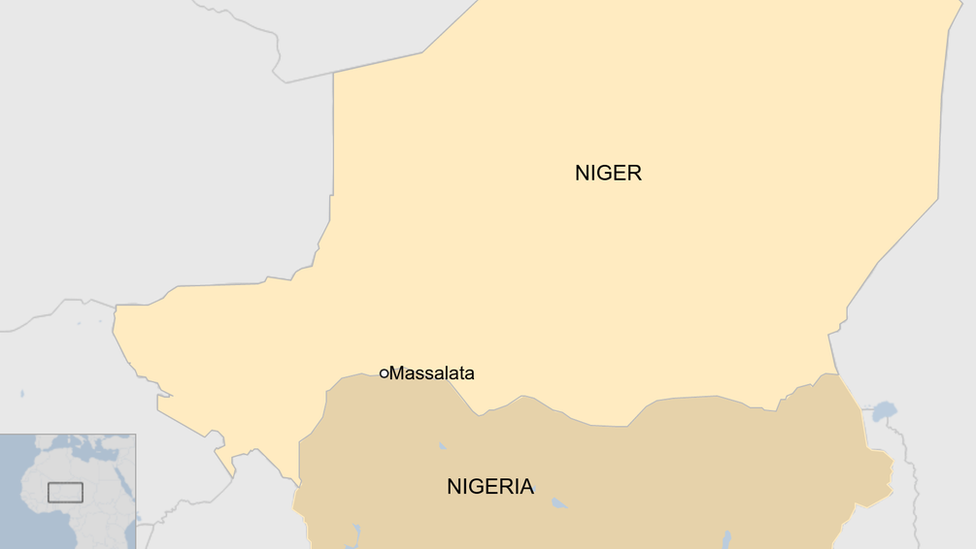
Philip Walton was abducted on Monday from a village close to the border with Nigeria.
He was taken across the border into Nigeria and rescued on Saturday.
Jihadist and criminal groups are known to operate in the area. It's thought at least six hostages are currently being held captive in the Sahel area.
Mr Walton was abducted from the village of Massalata, where he had been living with his wife and child for two years, his father told AFP news agency.
Locals said six men armed with AK47s arrived in the village on motorbikes.
It's unclear why Mr Walton was targeted and who the armed group were.
"This American citizen is safe and is now in the care of the US Department of State," a statement from Jonathan Hoffman, assistant to the Secretary of State for Public Affairs said.
He added that no American service personnel were harmed in the operation to rescue Mr Walton from the "armed men".
US President Donald Trump sent a tweet praising the elite special forces.
Niger is battling various armed groups. In August, six French aid workers as well as their driver and local guide were killed by gunmen in the Koure area of Tillebery region, which attracts tourists who want to see the last herds of giraffe in West Africa.
At least six Western hostages are being held in Niger, Mali and Burkina Faso, including the American aid worker Jeffery Woodke, who was kidnapped in central Niger four years ago.