https://en.wikipedia.org/wiki/Crab-eating_macaque
"Darwin was the first to use data from nature to convince people that evolution is true, and his idea of natural selection was truly novel. It testifies to his genius that the concept of natural theology, accepted by most educated Westerners before 1859, was vanquished within only a few years by a single five-hundred-page book. On the Origin of Species turned the mysteries of life's diversity from mythology into genuine science." -- Jerry Coyne
Friday, July 2, 2021
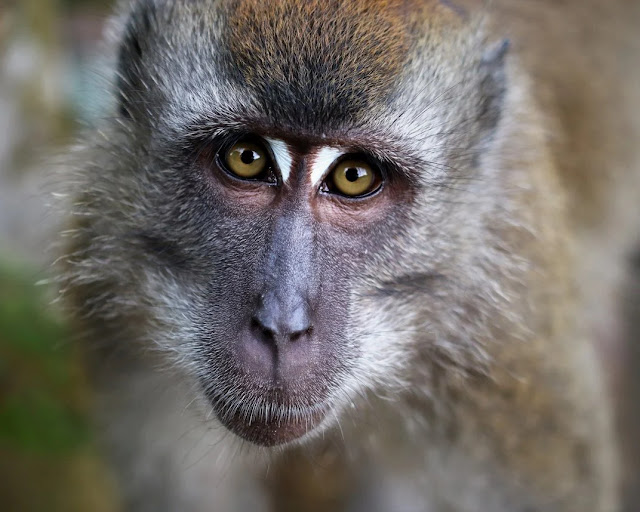
long-tailed macaque
https://en.wikipedia.org/wiki/Crab-eating_macaque
Friday, June 25, 2021
Tuesday, June 22, 2021
A very interesting story. I'm putting 2 links here for myself.
https://www.nytimes.com/2021/06/18/science/koepcke-diller-panguana-amazon-crash.html
https://en.wikipedia.org/wiki/Juliane_Koepcke


Sunday, June 20, 2021
Sunday, June 13, 2021
I'm adding this to my list of favorite chess quotes: "I love harassing opponents with Queen and Bishop combinations."
Engineer. Musician and love movies and traveling. I love harassing opponents with Queen and Bishop combinations.
KenyaMember since Mar 4, 2019
Game completion rate: 100%
Kisumu
Description
Description
Kisumu is a Kenyan port city on Lake Victoria. It’s known for lakeside viewpoints at Dunga Hill Camp and Hippo Point. The Kisumu Impala Sanctuary shelters herds of impalas and zebras. Its animal orphanage is home to wildlife like cheetahs and baboons. The city’s Kisumu Museum displays artifacts related to the people of the Nyanza Province. Southwest, Ruma National Park has tall cliffs, roan antelope and birdlife. ― GoogleWednesday, May 26, 2021
President Biden wants to protect my favorite creatures. That's a good thing.
|
|
Wednesday, May 19, 2021
"A colony of monkeys has lived for about 70 years in urban South Florida."
Monkey business: Researchers find origins of Florida colony
By Associated Press
May 19, 2021
DANIA BEACH, Fla. — A colony of monkeys has lived for about 70 years in urban South Florida, near jets taking off from a nearby airport and fuel storage tanks.
No one was quite sure where they came from. Until now.
Researchers at Florida Atlantic University say they have traced the colony’s origins to the Dania Chimpanzee Farm. The South Florida SunSentinel reported Wednesday there was a monkey escape from the farm in 1948, with most of the monkeys recaptured. But not all of them.
The rest disappeared into a mangrove swamp, where their descendants live today. The FAU team said the colony currently numbers about 41.
The FAU researchers traced the monkeys’ genetics and concluded they were brought to Florida from Africa. The monkeys were sold mainly for medical and military research.
One thing is certain: Residents of the Dania Beach area where the monkeys live are extremely protective of them.
“The community still loves them,” said Deborah “Missy” Williams, lead author of the study, who is in the FAU Biological Sciences Department. “They care for them. They want them protected.”
Williams has founded the Dania Beach Vervet Project to protect them and is trying to raise money to buy land to serve as a sanctuary.
Friday, May 7, 2021
I played a chess game against someone in East Kalimantan, Indonesia. I looked it up. Orangutans and turtles live there and that's a good thing. It would be a disaster if these creatures went extinct .
Wednesday, May 5, 2021
Calvin and Hobbes by Bill Watterson for January 29, 1986. Calvin's mother is using something called a "typewriter" which people used in the Dark Ages to type stuff. Wikipedia: "A typewriter is a mechanical or electromechanical machine for typing characters. Typically, a typewriter has an array of keys, and each one causes a different single character to be produced on paper by striking an inked ribbon selectively against the paper with a type element."
Monday, May 3, 2021
Saturday, April 17, 2021
Boar: a tusked Eurasian wild pig from which domestic pigs are descended.
Where Boars Hog the Streets
Groups of boars have become an unavoidable presence in Haifa. Some human residents are charmed, but others are annoyed or frightened and now carry sticks on walks.

By Patrick Kingsley
April 9, 2021
HAIFA, Israel — The wild pigs of Haifa might not fly, but they seem to do almost everything else.
The boars snooze in people’s paddling pools. They snuffle across the lawns. They kick residents’ soccer balls and play with their dogs. They saunter down the sidewalks and sleep in the streets. Some eat from the hands of humans, and they all eat from the trash.
The wild boars of Haifa, in short, are no longer particularly wild.
Once largely confined to the many ravines that slice through this hilly port city on the Mediterranean, the boars have become increasingly carefree in recent years and now regularly venture into built-up areas, undeterred by their human neighbors.
“It became like an everyday thing,” said Eugene Notkov, 35, a chef who lets his dog play with the boars that putter around the local parks. “They’re a part of our city,” he added. Bumping into one is “like seeing a squirrel.”
In many countries, animal sightings increased after the pandemic began and people deserted public spaces. But Haifa’s boars started their conquest well before the coronavirus wrought its havoc. In 2019, residents reported 1,328 boar sightings to the city authorities — almost 40 percent more than the 2015 total. The Haifa City Council declined to release data for 2020.
The growing presence of the boars has sparked a rumpus in local discourse. For some, the boars are a menace, and the Council is to blame for their continued presence. For others, they are a charming addition to an already unusual place.
Israel’s third-largest city, with a population of nearly 300,000, Haifa has an eccentric topography. Built on the side of Mount Carmel, the city in Israel’s north is divided between districts that line a flat waterfront and neighborhoods that straddle a rugged mountaintop. Ravines, or “wadis,” run through the city, creating a rare blend of urban and natural (albeit one often pockmarked by industrial waste).
“It’s a secret garden,” said Rona Shahar, a painter and Haifa resident. “And there is a magical side to it.”

“I wish we could all in Israel learn to live like they live in Haifa,” said Edna Gorney, a poet, ecologist and lecturer at the University of Haifa. “It’s an example of coexistence — not only between Arabs and Jews, but also between humans and wildlife.”
For dreamers like Ms. Shahar, the painter, it feels almost unsurprising that boars should live cheek by jowl with Haifa’s humans. After moving to Haifa in 2008, she found a city that lends itself to the surreal, and began a series of paintings and drawings that explored what it would look like if the city were overrun with friendly tigers.
“I just had no idea there would actually be wild animals roaming the streets,” said Ms. Shahar. “It seems appropriate in some way.”
No one quite agrees why the boars entered Haifa in such high numbers. Some wonder if a huge fire in and around Haifa in 2016 destroyed the boars’ natural habitat, forcing them into the city. Others claim it was the mayor’s decision in 2019 to stop shooting the boars.
But the statistics show that the boars’ forays were already rising by the time the shooting stopped. And ecologists say the boars still have plenty of food in the nearby ravines outside Haifa. The real reason for their presence in the city, said the Haifa Council’s in-house ecologist, is that humans are leaving too much food waste in places that are even more accessible than the ravines.
“It’s easy to find food in the city,” said Yael Olek, the municipal ecologist. “And they don’t have to forage for it for a long time.”
Whatever the cause of their presence, the boars have sparked real fury among some parts of the population. For every Rona Shahar, there is someone who sees the boars as a danger and a pest.
In their quest for food, boars regularly gobble the grass on people’s lawns, or rifle chaotically through their trash cans. And while many boars have become almost tame in their behavior around humans, eating food from residents’ hands, some are still highly aggressive, particularly when with their young. In January, a boar bit a pensioner in the leg — the day after another boar made off with a schoolgirl’s pink school bag.
“They are controlling the streets now,” said Assaf Schechter, 43, a port worker confronted recently by a boar on his porch. “It’s a very crazy situation.”
Mr. Schechter’s teenage daughter sometimes calls him for moral support after late-night boar encounters, he said. His mother-in-law, Esti Shulman, has taken to carrying a stick in the street, after being run off the sidewalk recently by a pack of boars.
“They should collect the little ones and put them in a park,” said Ms. Shulman, 75, a retired bookkeeper. “Or take them to the Golan Heights! Or shoot them!”
This ire has been increasingly aimed at the mayor, Einat Kalisch-Rotem. At a recent public meeting convened by the Council to discuss the boar issue, hundreds of residents showed up to harangue her for three hours.
“This past Saturday,” said an Sarit Golan-Steinberg, a lawyer and Council member, “my husband came running back home because he ran into a 150-kilogram female boar!”
“Tell me,” Ms. Golan-Steinberg demanded, “do you think this is funny?”
Ms. Kalisch-Rotem has hardly been idle in the face of these powerfully built animals, which can top 300 pounds. Under her watch, the Council has fenced off parks and ravines, to choke the access points to the city — and fixed chains to trash cans, to limit access to food waste. But since the municipality has declined to release more recent data about the presence of boars, it is unclear whether these strategies have had an effect.
In the meantime, amateurs have attempted their own solutions. One group tried to build an app that could deter boars with subsonic sound waves. Others discussed leaving lion dung near boar hot spots, in the hope that the smell would deter the pigs.
Prof. Dan Malkinson, a wildlife expert at the University of Haifa, investigated whether boars could be repelled with urine, conducting his own informal experiment beside the lemon and loquat trees at the bottom of a friend’s garden.
“At night, I would go out, after a drink, and recycle the beer,” Professor Malkinson said. “It’s two for the price of one — you fertilize the trees and you try to deter the wild boars.”
Sadly, however, the boars kept coming.
But Professor Malkinson, who has researched the boars for years, and even tracked them with collars fitted with GPS devices, wonders if the boars are really Haifa’s biggest problem.
The tension that most needs a solution, he said, is not between boars and humans — but among the humans themselves.
“Essentially the conflict is between those who oppose having wild boars in the city and those who don’t,” Professor Malkinson said.
“It’s not an ecological problem,” he added. “It’s a social problem.”
Patrick Kingsley is the Jerusalem bureau chief, covering Israel and the occupied territories. He has reported from more than 40 countries, written two books and previously covered migration and the Middle East for The Guardian. @PatrickKingsley
A version of this article appears in print on April 9, 2021, Section A, Page 10 of the New York edition with the headline: A City Where Wild Boars Enjoy the Life of the Boulevardier.
Thursday, April 15, 2021
April is a wonderful thing.


Tuesday, April 13, 2021
I just played a chess game against someone in Alberta, Canada, which is north of Montana.
STREET GANGS IN ALBERTA, CANADA
It's gangs like these that the people of Alberta have to put up with..
A bit different from the problems in other cities...
It proves that every City has their own "unique" gang problems.
They roam the streets and yards night and day.
They hang out in even the best neighborhoods!
..and you CANNOT (legally) stop them.
Sunday, April 11, 2021
Thursday, March 18, 2021
Wednesday, March 17, 2021
Stupid fucking assholes are eating bonobos and destroying their habitats. There are only 15,000 bonobos left. We need to kill the assholes.
We share an ancestor with chimpanzee apes and bonobo apes.
Bonobos and chimpanzee apes share an ancestor. They became separated by the Congo River and that's why they evolved differently. This is called speciation.
Google:
How many bonobos are left?
15,000-20,000
Bonobos battle bush meat hunting and shrinking habitats
Throughout their range, bonobos are increasingly at risk from human beings, who have killed them off to the point of endangerment. Today there are an estimated 15,000-20,000 wild bonobos remaining.
The endangered bonobo: Africa's forgotten ape
Sunday, March 14, 2021
Harpy Eagle in Brazil
Harpy Eagle Harpia harpyja adult female perched in the Atlantic Forest of Sooretama Reserve, state of Espirito Santo, Brazil
Tuesday, March 2, 2021
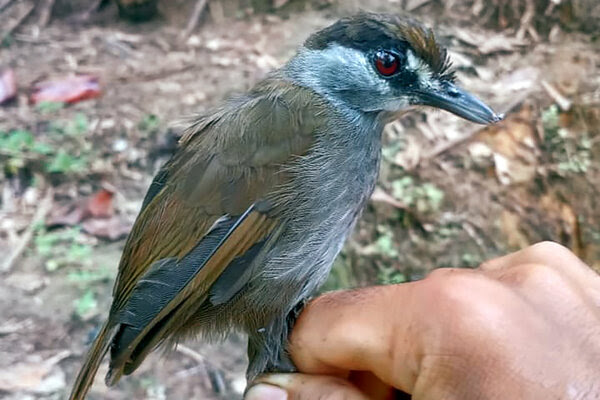
This stuff is from the New York Times. The black-browed babbler is a beautiful creature, and thank goodness it isn't extinct.
|
9. What might be Asia’s longest-missing bird just came out of hiding. |
For the first time in 170 years, the black-browed babbler was found in an Indonesian forest. Ornithologists first described the bird around 1850, after the one and only known specimen of the species was collected. Then the enigmatic bird disappeared. |
One conservationist said the discovery was “as shocking as rediscovering the passenger pigeon or Carolina parakeet.” |
In other discoveries, a team of scientists reconstructed the outer and middle ear of Neanderthals and concluded that they listened to the world much like we do, adding a new piece to the puzzle of whether early humans could speak. |